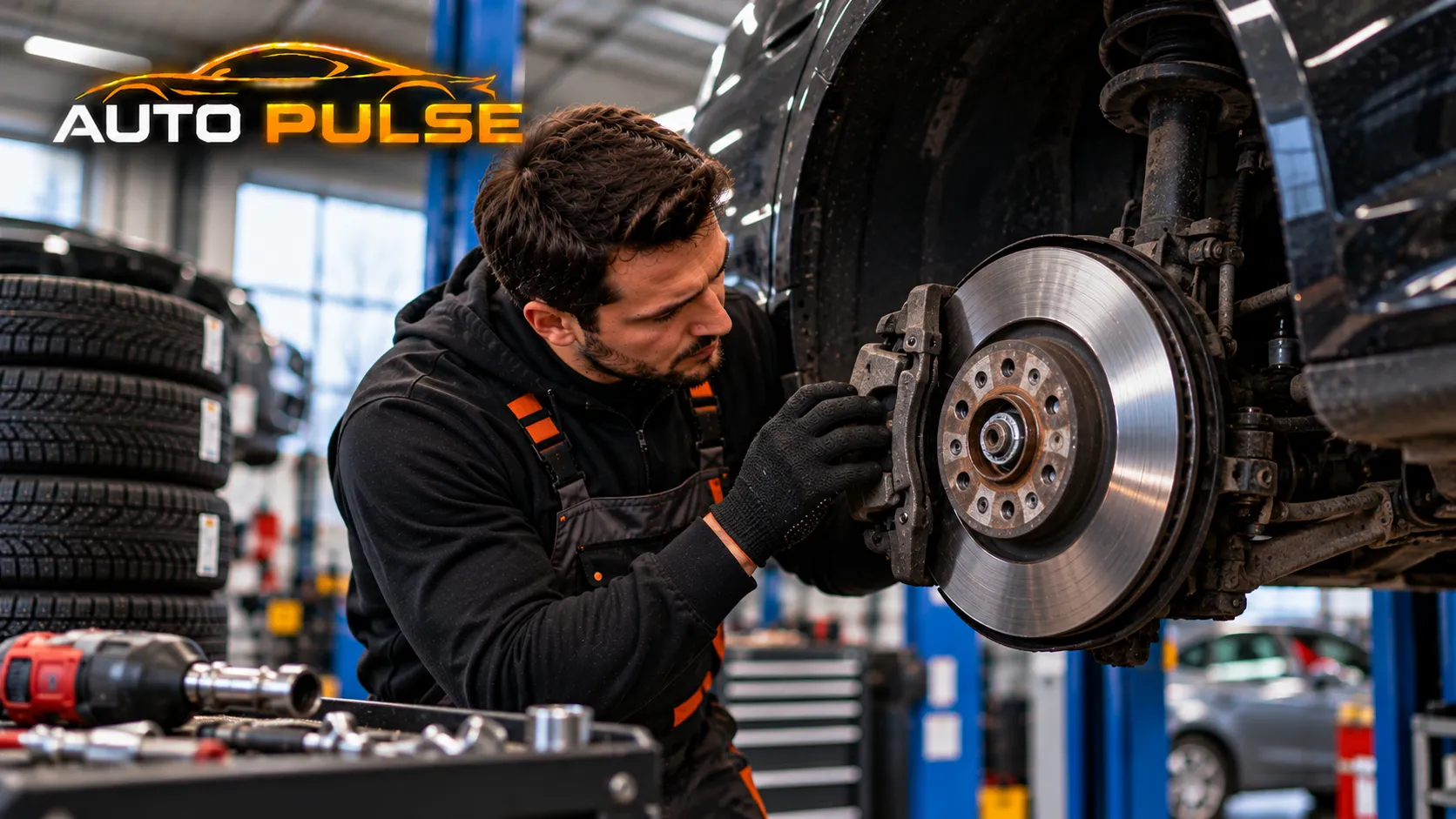
Have you recently visited an auto service, replaced brake pads, or installed a new set of tires, and then noticed an unusual noise? Has your car started squeaking when braking, developed a monotone hum at speed, or exhibited unfamiliar steering wheel vibration?
Such symptoms naturally raise the question: Is noise after replacing brake pads or humming after changing tires a normal characteristic of new parts or a sign of malfunction?
The causes can vary. Sometimes new components genuinely require a break-in period. In other cases, the noise is related to material properties, improper installation, or issues with adjacent assemblies that existed even before the repair.
In this guide, specialists at AutoPulse in Tallinn explain what sounds may appear after vehicle maintenance, how to determine the likely cause, and when it is necessary to seek diagnostics.
Noise After Replacing Brake Pads and Discs: Normal or Problematic?
The braking system directly affects vehicle safety, so any unusual sounds after its servicing require attention.
After installing new pads, squeaks, squeals, whistling, or other friction noises may occur.
This does not always indicate an installation error.
However, it is important to distinguish between temporary break-in characteristics and signs of malfunction.
Squeaking and Squealing After Pad Replacement: Main Causes
New brake pads and discs have working surfaces that may require some time to bed in.
During this period, a quiet squeak sometimes occurs, especially under light pressure on the brake pedal.
However, pronounced or constant squealing may be linked to other causes.
1. Friction Material Characteristics
Different brake pads vary in composition, hardness, and friction properties.
Some compounds are more prone to high-frequency noise at certain temperatures and loads.
This does not necessarily indicate a fault but requires assessment if the sound is loud or appears alongside deteriorating braking performance.
2. Incorrect Installation of Anti-Squeal Components
Depending on the brake system design, special plates, springs, and retainers are used.
If they are damaged, missing, or incorrectly installed, the pads may vibrate and create noise.
AutoPulse — auto repair and spare parts in Tallinn.
3. Contamination or Impaired Mobility of Guide Pins
Guide pins and caliper mounting surfaces must be in proper working condition.
Corrosion, dirt, and improper maintenance can hinder free movement of the parts.
Lubricant should only be applied in manufacturer-specified locations and using appropriate compounds.
It must never be applied to the friction surfaces of pads and discs.
4. Condition of the Brake Disc
If new pads are installed on a disc with significant grooves, corrosion, or uneven wear, this may contribute to foreign noises.
Before replacing pads, the condition of the discs and their compliance with allowable dimensions must be assessed.
Humming or Pulsation When Braking: What to Check
If pulsation of the pedal, steering wheel vibration, or low-frequency humming occurs during braking, additional diagnostics are required.
Possible causes:
- Brake disc runout.
- Uneven thickness of the disc’s working surface.
- Contamination of the hub mating surface.
- Improper installation of the brake disc.
- Impaired mobility of the caliper.
- Damage or wear of brake system components.
When installing a brake disc, it is crucial to properly prepare the hub surface.
Corrosion and contaminants between the disc and hub can disrupt its seating and promote runout.
It is also necessary to check the caliper.
If the piston or guide pins do not ensure normal movement, the pad may continue contacting the disc after releasing the brake pedal.
This can cause overheating, accelerated wear, and foreign noises.
If severe vibration, metallic grinding, or deteriorated braking appears after replacing brake pads, continuing normal vehicle operation is unsafe.
Humming and Vibration After Tire Replacement: Four Main Causes
Seasonal tire replacement is one of the most demanded automotive services in Estonia.
However, sometimes after installing a new set, drivers notice humming, rolling noise, or vibrations that were not present before.
It is important to understand that humming after tire replacement is not always related to balancing.
Tires differ in tread pattern, rubber compound, construction, and acoustic characteristics.
Therefore, a new set may sound different even with correct installation.
1. Wheel Imbalance
Imbalance occurs when the mass of the wheel is distributed unevenly relative to the axis of rotation.
The most characteristic symptom is vibration that manifests or intensifies within a specific speed range.
The driver may feel it:
- On the steering wheel.
- On the seat.
- Through the vehicle body.
- While driving on a smooth road.
After mounting a tire onto a rim, the assembled wheel is usually balanced.
If vibration appeared after tire fitting, balancing and correct wheel installation must be checked.
However, a monotone hum without vibrations alone does not allow confident diagnosis of imbalance.
2. Wheel Rim Deformation or Tire Damage
After hitting a pothole or striking a curb, the rim may become deformed.
Sometimes damage is almost invisible during a standard visual inspection.
During wheel rotation, this may manifest as runout and vibrations.
Other possible causes include:
- Tire shape irregularity.
- Carcass damage.
- Incorrect bead seating.
- Contamination of mounting surfaces.
- Wheel centering issues on the hub.
If balancing does not eliminate vibration, the rim geometry and tire condition must be checked.
3. Incorrect Installation of Directional or Asymmetric Tires
Some tires have a directional tread pattern.
On their sidewall, there is usually an arrow marked ROTATION, indicating the correct direction of rotation.
If such a tire is installed incorrectly, its wet-road performance may deteriorate.
Asymmetric tires have markings:
- OUTSIDE — outer side.
- INSIDE — inner side.
These markings must be observed during installation.
Incorrect tire orientation may affect performance characteristics but does not necessarily cause noticeable humming.
Therefore, when noise appears, not only installation direction but also other possible causes should be checked.
4. Pressure and New Tread Characteristics
After seasonal replacement, tire pressure must be checked.
It should correspond to the vehicle manufacturer’s recommendations, taking into account tire size and load.
Too high or too low pressure can affect comfort, wear patterns, and vehicle behavior.
Additionally, a new tire may be noisier than an old one due to tread pattern and construction features.
For example, winter tires with prominent tread blocks and studs typically have a different acoustic character than summer tires.
If only moderate uniform noise appears after tire replacement, without vibrations or handling deterioration, the cause may lie in the characteristics of the set itself.
But if the hum quickly intensifies, is accompanied by vibrations, or unusual vehicle behavior, diagnostics are necessary.
How to Distinguish Normal Break-In from Dangerous Malfunction
The same sound can have different causes.
For preliminary assessment, it is important to consider when the noise appears, how intense it is, and whether it is accompanied by other symptoms.
| Symptom | Possible Cause | Action Required |
| Quiet short-term squeak after pad installation | Break-in or friction material characteristics | Monitor changes in sound, follow manufacturer recommendations |
| Loud constant metallic grinding | Damage, incorrect installation, or brake malfunction | Cease normal operation and arrange for diagnostics |
| Steering wheel vibration in a specific speed range | Imbalance, disc runout, or wheel centering issues | Check wheels and fasteners |
| Pedal pulsation when braking | Disc runout, thickness variation, or another brake fault | Inspect the braking system |
| Monotone hum increasing with speed | Tires, wheel bearing, or other rotating assemblies | Diagnose the noise source |
| Significant heating of one wheel, burning smell | Possible sticking of the brake mechanism | Stop in a safe place and seek assistance |
This table helps determine the direction of inspection but does not replace professional diagnostics.
When You Must Stop Immediately
Do not continue driving normally if the following occur:
- A sudden decrease in braking efficiency.
- Severe metallic grinding.
- Smell of overheated brakes or smoke.
- Pronounced vibration hindering control.
- A feeling that a wheel is loosely secured.
- Strong vehicle pull to one side during braking.
In such cases, stop safely and assess the need to tow the vehicle to a service center.
What to Do If Noise Persists After Repair
If foreign noise appeared immediately after replacing pads or tires, act systematically.
Step 1. Identify Conditions Under Which Noise Appears
Try to note:
- At what speed the sound appears.
- Whether it occurs during braking.
- Whether it changes when turning.
- Whether it depends on road surface.
- Whether it is accompanied by vibration.
- Whether it appears after the vehicle warms up.
These observations will help the technician quickly identify the likely cause.
Step 2. Check Available Parameters
If it is safe, you can independently check tire pressure and visually inspect the wheels.
Do not attempt to disassemble the braking system yourself without appropriate skills and equipment.
Wheel bolt or nut torque specifications must be determined according to the requirements of the specific vehicle manufacturer.
There is no universal value suitable for all passenger cars.
Step 3. Contact the Auto Service Center
If noise appeared after recent maintenance, report it to the service center that performed the work.
Explain which parts were replaced and under what conditions the problem manifests.
Depending on symptoms, the following may be required:
- Check of brake pad installation.
- Inspection of discs and calipers.
- Balancing verification.
- Control of wheel fastening.
- Diagnosis of wheel bearings.
- Suspension inspection.
If the noise is unrelated to the completed replacement but stems from another fault, separate diagnostics will be needed.
Step 4. Do Not Delay Inspection If Symptoms Worsen
If noise increases, overheating appears, or the vehicle begins to brake poorly, do not wait for the problem to resolve itself.
Timely inspection helps prevent additional damage and reduces risks during operation.
Can Post-Repair Noise Be Related to Suspension?
Yes.
Sometimes tire or brake pad replacement coincides in time with the manifestation of a fault in another assembly.
For example, a monotone hum while driving may be related to a wheel bearing.
Knocking over bumps may stem from suspension components.
Vibrations can arise from damaged rims, wheels, or running gear parts.
Therefore, it is important not to conclude the cause solely based on the fact that the sound appeared after visiting an auto service center.
Read more about possible faults in the article “Knocking in Vehicle Suspension: 7 Main Causes”.
Frequently Asked Questions (FAQ)
How Long Does Break-In of New Brake Pads Take?
Duration depends on pad material, disc condition, and manufacturer recommendations.
For some sets, the break-in period lasts several hundred kilometers.
During this time, follow the manufacturer’s instructions regarding braking mode.
If squeaking intensifies, overheating appears, or braking efficiency deteriorates, do not wait for the break-in period to end.
Can New Tires Hum Louder Than Old Ones?
Yes.
A new tire may differ in tread pattern, construction, and acoustic characteristics.
Therefore, after seasonal replacement, noise levels sometimes change.
However, pronounced humming with vibration requires checking balance, wheel condition, and other assemblies.
Is It Dangerous to Drive With Squeaking After Pad Replacement?
A quiet short-term squeak does not always indicate a fault.
But strong, constant, or metallic sounds require inspection.
Especially if accompanied by deteriorated braking, vibrations, or overheating.
Why Does the Steering Wheel Vibrate After Tire Replacement?
Possible causes include wheel imbalance, rim deformation, incorrect centering on the hub, or tire damage.
To determine the cause, it is recommended to check the assembled wheel and installation quality.
Can Humming Come From a Wheel Bearing Rather Than Tires?
Yes.
A worn wheel bearing can produce a monotone hum whose intensity changes with speed and sometimes during turns.
However, similar sounds can be produced by certain tires, so diagnostics are necessary.
Should I Return to the Service Center Immediately If Noise Appears After Pad Replacement?
If the sound is loud, metallic, growing, or accompanied by deteriorated braking, do not delay inspection.
With weak short-term squeaking without other symptoms, consider manufacturer recommendations for break-in, but if in doubt, it is better to visit a service center.
Noise and Hum Diagnostics at AutoPulse in Tallinn
Noise after replacing brake pads or tires can arise from various causes.
Sometimes it is sufficient to check balance, pressure, or correct installation of parts.
In other cases, diagnostics of the braking system, wheel bearings, or suspension are required.
The main thing is not to ignore new sounds, especially if they are accompanied by vibration, overheating, or deteriorated handling.
If foreign noise appears after vehicle maintenance, contact AutoPulse in Tallinn.
We will help determine the possible cause and select further actions based on diagnostic results.
AutoPulse — auto repair and spare parts in Tallinn.