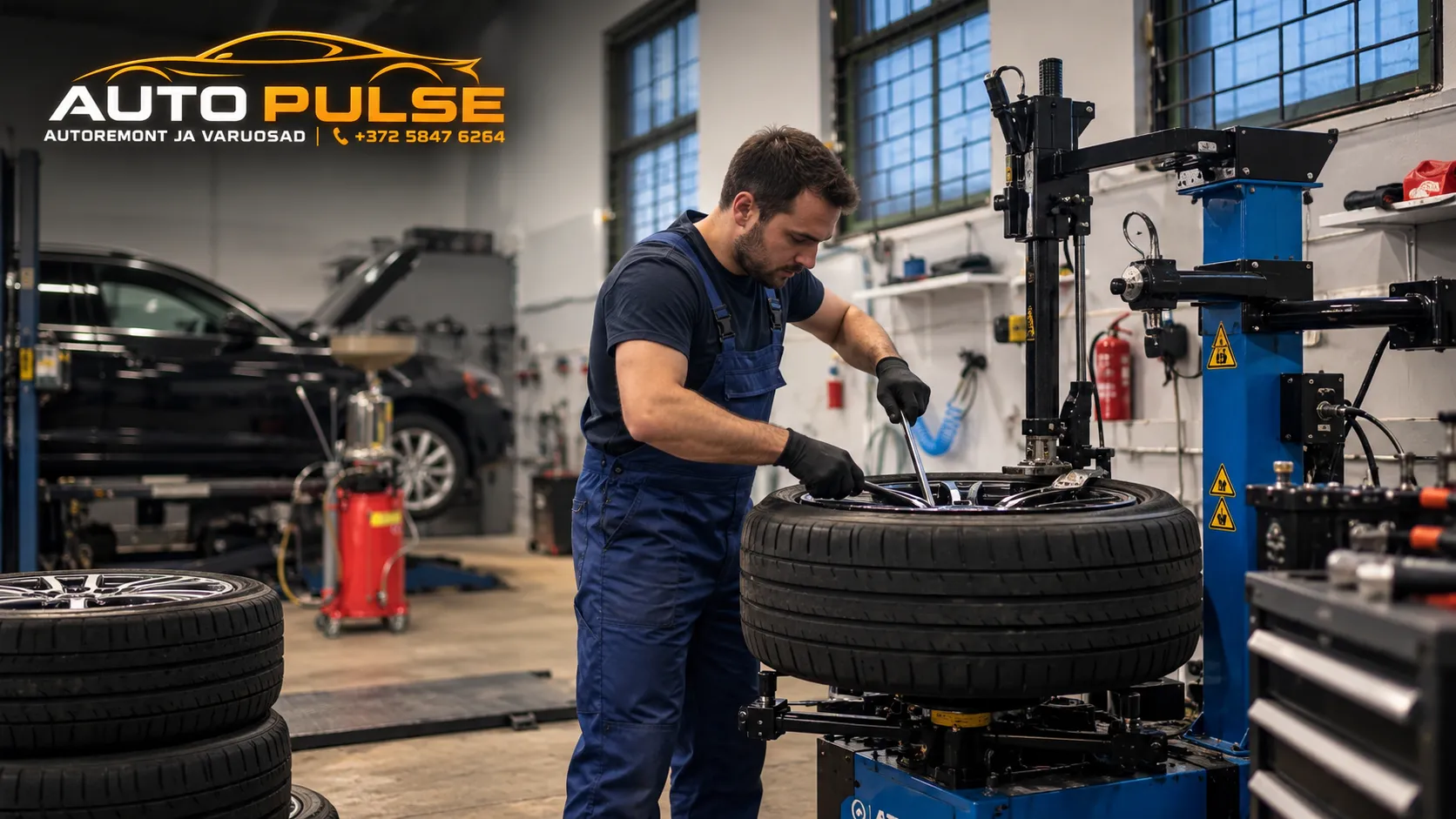
Tire replacement may seem like a routine and extremely simple procedure: you arrive, hand over the wheels, and get them back half an hour later. However, behind this apparent simplicity lie serious technical nuances. Using outdated tools or violating dismounting technology can lead to deep scratches on alloy wheels, mechanical damage to TPMS sensors, or tire damage that will only reveal itself on the highway.
To protect your property and your nerves, it is enough to take control of the situation even before the wheels are placed on the machine. Asking the right questions before the work begins will help you choose reliable specialists in Tallinn who value their reputation and your time.
Why you shouldn’t just silently hand over the keys?
Many drivers prefer not to interfere with the work process, relying on the integrity of the staff. Unfortunately, this tactic sometimes leads to three main risks.
The first risk is hidden surcharges. You might be quoted an attractive base price for a “tire change,” but the final bill may add the cost of balancing, new valves, rim cleaning, and old tire disposal as separate services.
The second risk is damage to expensive components. Low-profile tires and RunFlat technology tires require special handling. The stiff bead of such tires is harder to dismount, and improper use of metal tools increases the risk of damaging the rim or the tire sidewall.
The third risk is lack of accountability. If the service does not document the initial condition of the wheels and lacks a transparent procedure, it will be difficult to prove that a scratch on the rim appeared exactly during the work, and not earlier.
7 key questions to ask a tire fitting technician
To ensure the competence of the service, ask these seven questions. A professional technician will be able to explain what technologies and materials are used when working on your vehicle.
1. What equipment is used, and is there rim protection?
This is the first and one of the most important questions. Modern alloy, forged, and chrome-plated rims are easily scratched.
Clarify whether the tire changing machine is equipped with an auxiliary “third hand” device for working with low-profile tires, and whether plastic protective pads are used on the mounting head and machine clamps.
If the technician intends to use a metal pry bar directly on the painted surface of the rim without protection, this is a red flag.
Professional equipment and proper working techniques significantly reduce the risk of damage.
2. Does the final price include balancing, new valves, and weights?
Pricing transparency is a key indicator of a service’s reliability.
Ask for the full “turnkey” cost of working on a single wheel. Clarify whether this amount includes:
- Tire dismounting and mounting.
- Wheel balancing.
- Balancing weights.
- Valve replacement if necessary.
- Cleaning of the rim mounting surface.
- Additional consumables.
Balancing requires appropriate weights, and the condition of the valves must be checked during wheel maintenance. Old rubber valves lose their elasticity over time and can leak air.
To understand the price range, we recommend checking in advance how much tire service costs in Tallinn and comparing service prices.
3. How do you handle tire pressure sensors (TPMS)?
If your vehicle is equipped with a tire pressure monitoring system, this question is especially important.
TPMS sensors can be integrated into the valve and require careful handling. Improper tire dismounting can damage the sensor or its mounting.
Ask if the technician uses appropriate tools and service kits for TPMS.
A competent specialist takes the sensor’s location into account during tire dismounting and mounting to prevent mechanical damage to the electronic component.
4. Do you use a torque wrench for final tightening?
Tightening wheel bolts or nuts with a pneumatic impact wrench “by eye” is a common mistake.
Excessive tightening torque can lead to thread and fastener damage, making subsequent wheel removal difficult. Insufficient tightening creates a risk of the fasteners loosening while driving.
The correct approach is final tightening with a torque wrench to the torque specified by the vehicle manufacturer.
The torque value depends on the vehicle model and is specified in the technical documentation.
5. Do you provide a warranty for the work performed?
A responsible auto service provides clear warranty terms for its services.
Clarify what will happen if, after the tire change:
- Steering wheel vibration occurs.
- A balancing weight falls off.
- An air leak is detected.
- Other issues related to the performed work arise.
The presence of transparent warranty conditions shows that the service is ready to take responsibility for the quality of its work.
6. What happens in case of tire or rim damage during the process?
This question helps you understand how the service handles non-routine situations.
In professional workshops, the client may be offered to inspect the wheel before work begins, and any existing damage is documented.
Ask how claims are handled and how compensation is resolved if the damage was caused by the service.
A clear procedure for handling such situations is an important indicator of a responsible attitude toward the client.
7. Can I be present in the workshop area and observe the process?
Service transparency is important, but safety must remain a priority.
Clarify if the service has a safe customer area from which you can observe the technician’s work.
Restricting direct access to the work area may be justified by safety requirements and does not in itself indicate service unreliability.
The main thing is that the technician is ready to explain the operations being performed and answer the client’s questions.
Red flags: when you should immediately take your keys and leave
Sometimes, even without asking detailed questions, it is clear that the quality of service is questionable.
Disregard for safety technologies. The technician ignores TPMS specifics, uses inappropriate tools, or fails to protect the rim surface.
Refusal to provide documentation. You are not given a receipt or any other document confirming the services rendered.
Dirt and disorder. Equipment and work surfaces are not properly cleaned. Contaminants on the wheel can interfere with accurate balancing, and dirt on the mounting surfaces can compromise the tire-to-rim seal.
Pressure and upselling. You are persistently offered additional services without explaining their necessity, or they refuse to state the final cost before work begins.
Client checklist
Save this list to quickly check the tire service before maintenance begins.
- The machine is equipped with protective pads and equipment for safe work with low-profile tires.
- The final cost of the work is stated in advance.
- The technician knows the specifics of working with TPMS sensors.
- Final wheel tightening is performed with a torque wrench.
- The service provides clear warranty terms.
- There is a procedure for handling claims in case of wheel damage.
- The client can get information about the progress of the work and, if a safe zone is available, observe the process.
Why choose AutoPulse?
At AutoPulse, we understand that wheels are not just a consumable, but a crucial part of vehicle safety.
Our auto service in Tallinn is focused on professional maintenance, careful handling of your vehicle, and clear communication with clients.
When choosing a tire service, it is important to consider not only the price, but also the equipment, the qualifications of the technicians, the quality of consumables, and adherence to work technologies.
Check out AutoPulse tire services and choose the most suitable maintenance option.
Do not risk the condition of your rims and your safety on the road. Book your tire service through the AutoPulse website and prepare your vehicle for the season.
FAQ â Frequently Asked Questions
Do I need to wash the wheels myself before handing them in for tire service?
It is recommended to pre-clean heavily soiled wheels. Caked-on dirt and road chemicals can hide rim damage and interfere with accurate balancing.
However, the final cleaning of the necessary surfaces should be performed as part of the wheel preparation for service.
Is it mandatory to replace valves with every seasonal change?
Rubber valves age over time due to temperature fluctuations and road chemicals.
During tire dismounting, it is recommended to check the condition of the valves and replace them according to the manufacturer’s requirements and their actual condition.
Special service kits, including seals, nuts, and other components, may be used for TPMS sensors. The replacement frequency depends on the sensor design and the manufacturer’s recommendations.
If you are swapping complete wheel assemblies without dismounting the tires from the rims, automatic valve replacement is usually not required.
What to do if the technician damaged the rim but refuses to admit it?
If possible, do not leave the service premises until the circumstances are documented.
Ask to have the administrator or manager called, show the discovered damage, and document it with photos or video.
Keep the receipt, work order, and any correspondence with the service. Submit a written claim.
If the situation cannot be resolved, you can seek advice from the Estonian Consumer Protection and Technical Regulatory Authority (TTJA).