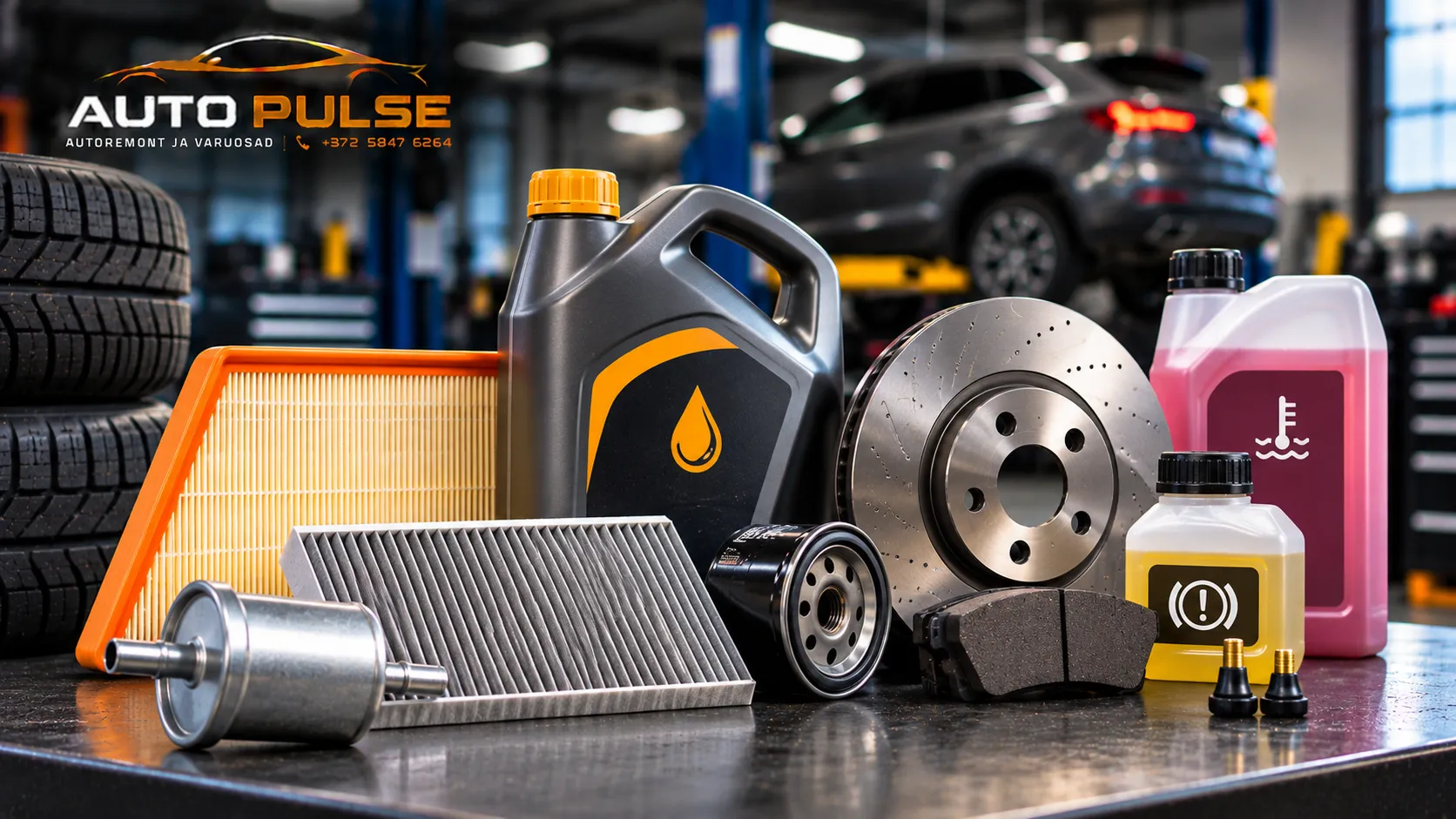
Regular replacement of engine oil and the oil filter is the foundation of vehicle maintenance. However, a modern car consists of many interconnected systems, and limiting maintenance to just an oil change is not enough.
The braking system, engine cooling, filters, suspension, and wheels also require attention. However, not every additional service needs to be performed during each visit to the auto repair shop.
What additional services does a car actually need? The answer depends on the make, model, mileage, age of the vehicle, operating conditions, and the manufacturer’s recommendations.
For drivers in Tallinn, this issue is particularly relevant: the humid climate, winter road de-icing agents, temperature fluctuations, and frequent short trips can affect the condition of individual vehicle components.
In this guide, the specialists at Auto Pulse explain which preventive maintenance tasks should be considered, when they are necessary, and how to create a reasonable maintenance plan without unnecessary expenses.
Why is basic maintenance — just an oil change — not enough?
Engine oil protects the moving parts of the engine from wear, helps dissipate heat, and removes contaminants.
However, timely oil changes do not guarantee the proper functioning of other vehicle systems.
For example, even with a well-maintained engine, problems can arise due to worn brake pads, a dirty cabin filter, old coolant, or damaged suspension components.
The specific operating conditions in Estonia must also be taken into account.
In winter, anti-icing materials are used on the roads, which contribute to the corrosion of metal elements. Temperature fluctuations and high humidity create additional stress on seals, electrical connections, and certain braking system components.
Therefore, proper maintenance includes not only the replacement of consumables but also periodic inspections of the vehicle’s condition.
The main principle: additional work should be scheduled based on the manufacturer’s maintenance schedule, the actual condition of the parts, or diagnostic results.
Top 5 additional services that help avoid costly repairs
Certain preventive procedures allow for the timely detection of problems and reduce the risk of serious malfunctions.
Let’s look at five maintenance areas that deserve your attention.
1. Replacement of cabin and fuel filters
Filters perform different tasks, but each of them affects the normal operation of the vehicle.
The fuel filter traps contaminants that may be present in the fuel.
Depending on the vehicle’s design, it protects fuel system components, including the pump and injectors, from the ingress of mechanical particles.
A clogged filter can restrict fuel flow and cause engine performance issues.
However, replacement intervals vary significantly. On some vehicles, the filter is a separate serviceable component, while on others, it is part of the fuel module assembly.
Therefore, the need for replacement is determined by the vehicle’s design and the manufacturer’s maintenance schedule.
The cabin filter cleans the air entering the passenger compartment through the ventilation system.
It helps trap:
- dust;
- plant pollen;
- road pollution particles;
- other air pollutants, depending on the filter type.
Over time, the filter becomes clogged, which can reduce ventilation efficiency and contribute to the appearance of unpleasant odors.
In urban environments, especially when frequently driving on Tallinn’s busy roads, its condition should be checked regularly.
If necessary, the filter is replaced without waiting for a significant deterioration in airflow.
2. Brake system maintenance: fluid replacement and caliper prevention
The braking system directly affects driving safety.
In addition to the periodic replacement of pads and discs, it requires monitoring the condition of the brake fluid, calipers, guide pins, and other components.
Most common glycol-based brake fluids are hygroscopic, meaning they can absorb moisture.
As the water content increases, the boiling point of the fluid can decrease.
During heavy braking, this increases the risk of vapor lock formation and a decrease in braking system efficiency.
Moisture can also contribute to the corrosion of internal components.
Therefore, brake fluid must be changed in accordance with the vehicle manufacturer’s maintenance schedule.
For many vehicles, the interval is about two years, but the exact value should be checked in the technical documentation.
It is also recommended to monitor the condition of:
- brake pads and discs;
- caliper guide pins;
- protective dust boots;
- brake hoses;
- fasteners.
If the guide pins seize or the caliper malfunctions, uneven pad wear, brake overheating, and reduced braking efficiency are possible.
Timely diagnostics help identify such issues before more serious malfunctions occur.
3. Wheel balancing and valve inspection
Seasonal tire changes are a convenient time to check the condition of the wheels.
Balancing compensates for the imbalance of an assembled wheel, which can cause vibrations while driving.
If tires are removed from the rims and reinstalled, balancing is necessary after mounting.
When seasonally changing complete wheel assemblies, rebalancing is not always required.
However, it is recommended to perform it if:
- vibrations appear on the steering wheel or vehicle body;
- the wheel has undergone repair;
- balancing weights have been lost;
- damage to the rim or tire is detected;
- there are doubts about the condition of the wheel.
Special attention should be paid to the valves.
The rubber elements of valves age over time and can lose their airtightness.
If necessary, the technician will recommend replacing the valve or its serviceable components.
If the vehicle is equipped with a TPMS tire pressure monitoring system, the valve design may differ from standard ones, so maintenance is performed in accordance with the manufacturer’s requirements.
For more details on how seasonal maintenance costs are formed, you can read the article “How much does tire service cost in Tallinn”.
4. Coolant replacement: protecting the engine from overheating and corrosion
Coolant, or antifreeze, performs several important functions.
It helps maintain the engine’s operating temperature, protects the cooling system from freezing, and contains additives designed to reduce corrosion.
Over time, the properties of the coolant can change.
However, there is no universal antifreeze replacement interval for all vehicles.
Depending on the system design and the composition used, the manufacturer may specify different maintenance intervals.
When inspecting the cooling system, it is important to assess:
- fluid level;
- presence of leak traces;
- condition of hoses and connections;
- compliance of the coolant with the manufacturer’s requirements;
- freeze protection temperature, if necessary.
Important: coolants should not be mixed based solely on their color.
Different formulations may have incompatible additive packages. When topping up or replacing, it is necessary to use a fluid of the appropriate specification.
If the engine overheats or the antifreeze level regularly drops, cooling system diagnostics are required, not just another top-up.
5. Throttle body cleaning if signs of contamination are present
The throttle body regulates the airflow into the engine.
During operation, oily deposits and contaminants can accumulate on its surface.
In some cases, this affects idle stability and the engine’s response to load changes.
Possible symptoms include:
- unstable idle speed;
- difficult starting;
- uneven engine operation;
- delayed response to the accelerator pedal.
However, such signs can also occur for other reasons.
Therefore, throttle body cleaning should not be performed automatically during every maintenance service.
First, it is necessary to determine whether the contamination is actually affecting engine performance.
On some vehicles, an adaptation procedure may be required after cleaning the electronic throttle body.
Seasonal additional maintenance: what is often forgotten
The climate in Estonia creates different vehicle operating conditions in winter and summer.
Therefore, it is convenient to perform certain preventive checks when preparing for the upcoming season.
Spring vehicle maintenance
After winter, it is recommended to pay attention to the following areas.
Undercarriage and wheel arch washing. This helps remove accumulated road grime and residues of anti-icing materials.
Inspection of the body and suspension components. It is useful to check for corrosion, damage to protective coatings, and the condition of rubber components.
Air conditioning check. Before the summer season, it is worth ensuring that the system cools the cabin effectively and operates without unusual odors.
At the same time, recharging the air conditioning is not a mandatory annual procedure. If the system is in good working order, intervention may not be necessary.
Inspection of summer tires. Before installation, it is necessary to check the tread depth, the absence of damage, and the compliance of the tires with the vehicle’s requirements.
Autumn vehicle maintenance
Before the onset of cold weather, it is recommended to check several important components.
Battery. At low temperatures, the available starting power of the battery decreases, so it is useful to assess its condition in the autumn.
Coolant. If necessary, freeze protection and the condition of the cooling system should be checked.
Door seals. Cleaning and applying suitable care products help reduce the likelihood of freezing.
Wipers and lighting. Visibility deteriorates in autumn and winter, so it is important to check the condition of the wiper blades, headlights, and taillights.
Winter tires. It is necessary to evaluate the tread depth and the overall condition of the set in advance.
For more details on the timing of seasonal tire changes, read the article “When to change winter tires to summer tires in Estonia”.
Comfort and safety: additional interior care services
Not all additional services are directly related to the mechanical components of the vehicle.
The condition of the interior also affects the comfort of use and can be significant during the subsequent sale of the car.
Interior dry cleaning
Professional dry cleaning allows for the removal of dirt from seats, carpets, and other interior elements.
This procedure is especially relevant if the vehicle is regularly used for family trips, transporting pets, or long journeys.
The scope of work depends on the upholstery material and the degree of soiling.
When choosing a service, it is important to consider that certain materials require specialized cleaning agents and methods.
Removal of unpleasant odors
The cause of an unpleasant odor in a car can be upholstery soiling, moisture, ventilation problems, or other sources.
Before treating the interior, it is desirable to determine the cause of the odor.
In some cases, specialized cleaning and deodorizing methods are applied.
Ozonation can be used as an additional procedure, but it does not replace the elimination of the source of contamination and requires adherence to safety measures.
After such treatment, the interior must be properly ventilated, and the presence of people and animals during the procedure is not allowed.
How to create an individual vehicle maintenance checklist
There is no universal set of additional services that is equally necessary for every vehicle.